Old Ferry Road
Black Water (Joyce Carol Oates Edition)Old Ferry Road is the obsolete marsh route that The Senator takes with Kelly Kelleher on the way to Brockden's Landing. Its missing signs and neglected condition make it more than a wrong turn: the road leads them into an unmarked hazard, and its isolation leaves the ensuing crash without witnesses or nearby traffic.
Route and Setting
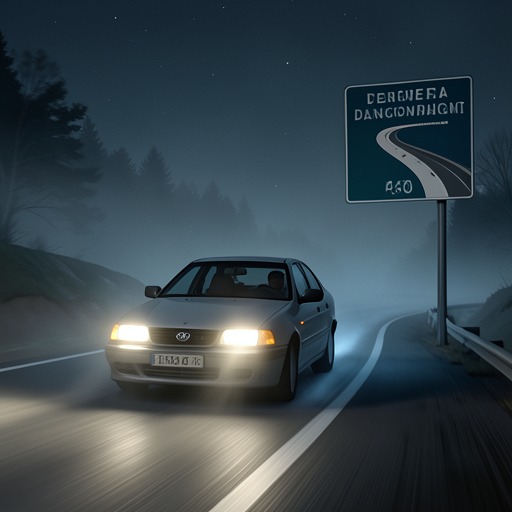
Known locally as Old Ferry Road, the badly rutted sandy track had not displayed a sign for years. A newer, paved Ferry Road had replaced it, and the turn for the old route lay three-quarters of a mile beyond the turn for the road drivers were meant to use. The Senator was headed toward the ferry, but he did not realize that he had taken a road no longer in use.
The route crosses a marshland environment that contrasts with the nearby Atlantic shore. On the old road, the air is associated with damp earth and black water; the ocean's fresh, stinging smell seems remote, and the surf is inaudible. Mosquitoes and nocturnal insects inhabit the marsh, while wind moves through stunted trees and tall rushes. The road's setting can disorient travelers: as the Toyota proceeds into the area, Kelly is unsure where they are, and the landscape's dim, unfamiliar forms deepen her unease.
Neglect and Hazards
Old Ferry Road was no longer maintained by Grayling Township and, according to the narrative, should have been officially closed. Its neglect is made consequential by the sequence of hazards beyond the turn. At dusk, there was no warning sign for a dangerous hairpin curve, nor a sign indicating the narrow, badly weathered wooden bridge approximately thirty feet ahead. The record of the road therefore points not only to a driver's navigational mistake but also to a route whose condition and missing warnings leave little margin for error.
The accident's precise mechanics are described with some uncertainty. The Toyota is estimated to have been traveling at about forty-five miles per hour when it lost control on the hairpin curve and plunged into the water. The narrative speculates that, had it remained on course, it might instead have struck the bridge railing and fallen into the water. Indian Creek, which runs through the marsh, is as much as eleven feet deep in some stretches and about twenty feet wide; it flows northeast toward a tidal pool and the Atlantic, roughly two miles away at Brockden's Landing.
The Wrong Turn and Crash
The drive takes place under time pressure. The Senator and Kelly leave a party at 17 Derry Road at approximately 7:55 p.m., aiming for the 8:20 ferry to Boothbay Harbor. They have about twenty-five minutes, enough time if they drive fast and follow the correct route. The Senator has had another drink or two, but the narration also stresses that turning onto Old Ferry Road would have been an understandable mistake at dusk even without alcohol.
At about 8:15 p.m., the rented Toyota leaves the road and enters the water. No witness sees the car plunge into the creek, and there are no other motorists on Old Ferry Road. The car's approach is not preceded by any warning of the curve or bridge. The road's isolation and the short remaining time before the ferry thus converge in a crash that is both a sudden vehicle accident and the beginning of Kelly's entrapment in the sinking car.
Aftermath and Significance
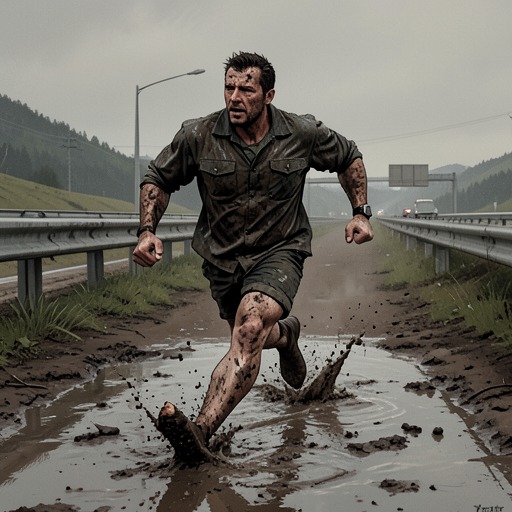
After escaping the car, The Senator makes his way back along the marsh road toward the highway, then reaches a telephone booth at a roadside parking lot and calls Ray Annick. In his urgent account, he says there has been an accident and that Kelly is dead; he also begins to describe the crash in a way that blames her. The call connects the road's physical isolation to a later effort to secure help and manage the consequences, while no witness is established as having seen the crash itself.
Old Ferry Road's narrative importance lies in how its landscape and infrastructure shape what can happen and what can be known afterward. The obsolete turn, absent signs, unmaintained surface, unmarked curve, and concealed bridge form a chain of risks; the marsh creek turns that chain into a life-threatening event. The road is not presented as a sufficient explanation for every decision or outcome, but its neglect is a concrete condition of the journey, and its lack of traffic makes the accident harder to witness and immediately respond to.